


July 7, 2026
On-Demand vs. Consolidated Freight: A Total Cost of Ownership Comparison for OEMs
A freight rate is only one line on a much longer invoice. For OEMs balancing consolidated lanes against on-demand capacity, the real comparison is about where risk lives, and what it costs to carry it.
The hidden math behind a shipping rate
Procurement teams have used total cost of ownership thinking for decades. They apply it when buying machinery, software, or vehicles. The logic is straightforward. The number on the invoice is rarely the number that matters most. Maintenance, financing, and disposal costs often outweigh the original purchase price. That same logic is now reaching freight contracts. A line item that reads "cost per shipment" hides a far larger picture underneath it.
Industry data on truck utilization shows how much hidden cost sits inside freight networks. This cost exists before a single negotiation begins. A 2026 analysis of deadhead trucking from FleetRabbit found that most established carriers target an empty mile rate between 15 and 22 percent. Fleets running above 28 percent have the most room for improvement. Every empty mile still carries fuel, driver time, and maintenance cost. It produces no freight revenue. That inefficiency is priced into the shipper's rate long before the first pallet is loaded.
What inventory and tariff data add to the picture
The State of the Supply Chain 2026 report from RELEX found that 86 percent of supply chain leaders say tariff changes have altered how they operate. Companies are split on the response. Fifty-nine percent are strengthening logistics partnerships to absorb volatility. A smaller group, 28 percent, are simply increasing safety stock instead. Neither approach has emerged as a clear winner. That says a great deal about how unresolved this trade-off still is.
What these data points share is a simple lesson. Cost hides in places a shipping rate will never show. For an OEM weighing how to move parts and finished goods, the real comparison is not one service against another. It is a comparison of two different ways to carry risk. Risk, whether or not it appears on an invoice, always has a price attached to it.
Applying the comparison to logistics decisions
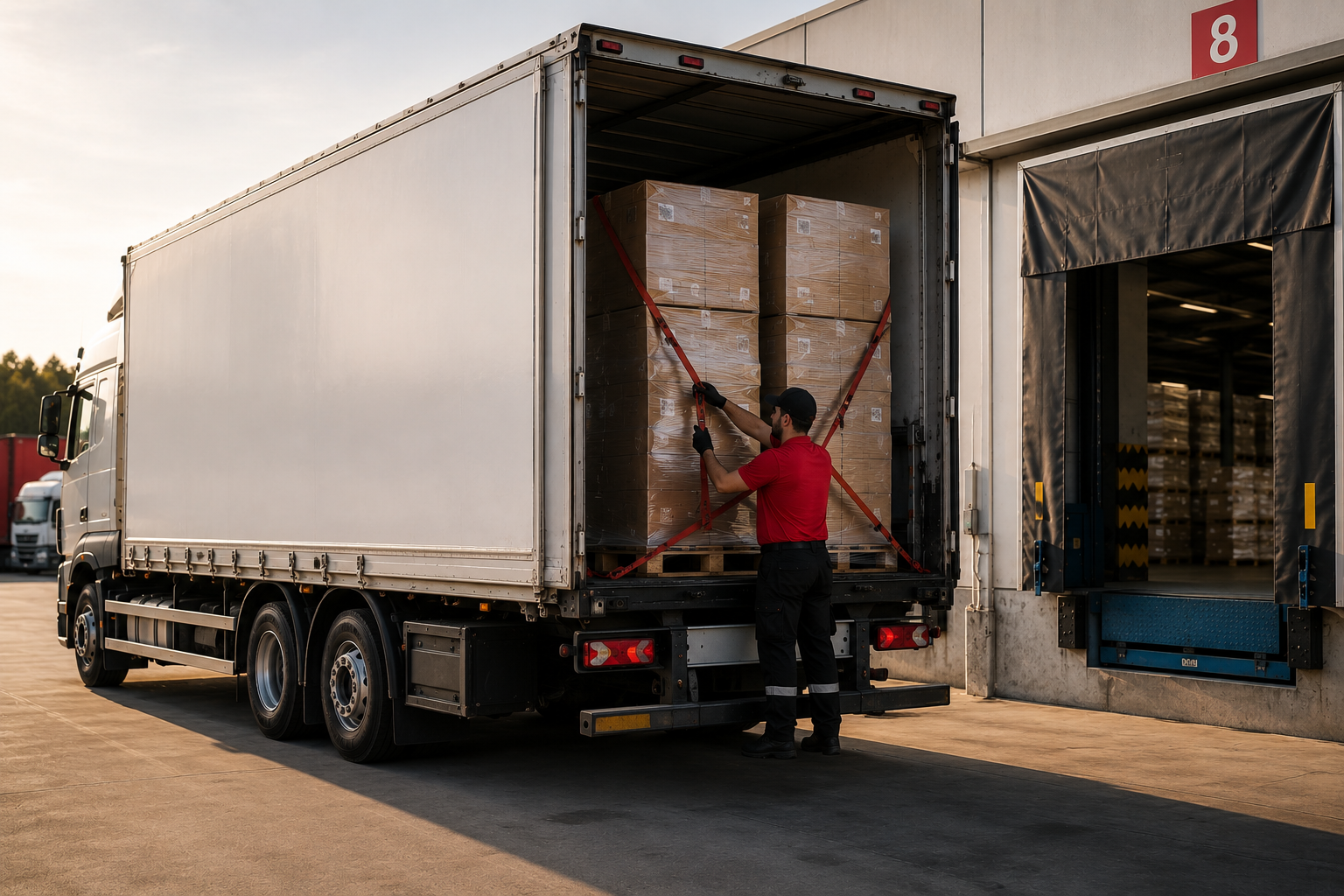
Consolidated freight groups multiple shipments into a single truck, rail wagon, or container. It runs on a fixed route and timetable. This model rewards predictability. Carriers can plan capacity weeks ahead. They pass the resulting efficiency back to the shipper as a lower rate per unit. On-demand freight works the opposite way. A vehicle or aircraft is dispatched for one shipment, on short notice. Speed and timing certainty take priority over cost.
The market is shifting in ways that make this choice harder to ignore. Mordor Intelligence projects the global freight and logistics market approaching 8.5 trillion dollars by 2031. International courier, express, and parcel services are among the fastest growing segments. At the same time, the 2026 Thomson Reuters Global Trade Report found that trade-related supply chain concerns have doubled year over year. Seventy-two percent of trade professionals name tariff volatility as the most disruptive regulatory change they face. Growth in flexible freight capacity and growth in disruption are happening at the same time. That is unlikely to be a coincidence.
The real cost of not shipping at all
The case for consolidated freight rests on economies of scale. For stable, forecastable volumes that argument holds firmly. The case for on-demand freight rests on a different calculation entirely. It is the cost of not shipping at all. A 2026 review by Manufacturing Lead Generation puts automotive assembly line downtime as high as 33,000 dollars per minute. That figure accounts for welding, paint, final assembly, and outbound shipments backing up together. A single premium freight invoice can outweigh months of consolidated shipping savings.
The question for an OEM's procurement team is therefore not which model costs less in isolation. It is which parts and lanes carry enough production risk to justify paying for certainty. Some logistics networks are already organizing themselves around exactly that question.
How some logistics networks are adapting
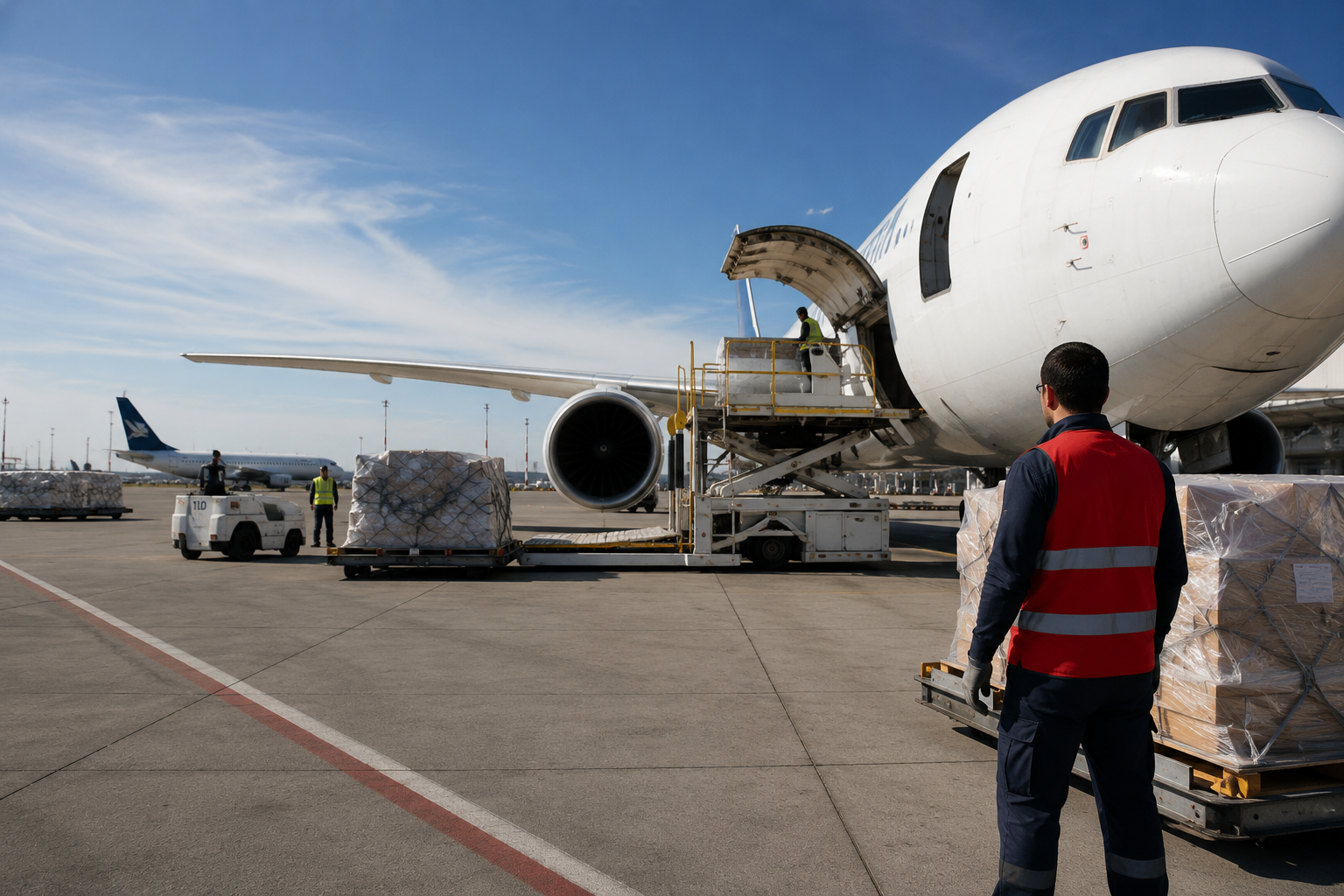
Some logistics networks are moving away from treating urgent and regular freight as two separate categories. Instead, they build both capabilities into a single operating model. Shipments move through scheduled, consolidated lanes by default. When a part, a deadline, or a disruption demands it, the network switches into urgent freight transport without restarting the vendor search from zero.
This approach leans on network design more than on fleet size. A growing share of logistics providers are moving away from asset-heavy models. In those models, capacity is limited by how many trucks or aircraft one company owns. The alternative is a partner-based network. Carriers across many regions pool their capacity through a shared partnership structure. Mordor Intelligence describes this as a shift toward digitally orchestrated, partner-driven networks. These networks can flex capacity up or down without large fixed investment. For an OEM with plants across multiple countries, that flexibility is directly relevant. It maps onto vertical markets such as automotive and aerospace, where parts disruptions rarely follow a predictable schedule.
The visibility challenge in partner-based networks
Not every observer agrees that asset-light networks match the reliability of a carrier controlling its own fleet. The concern is valid. Coordination across many partners creates more handoff points. Each handoff is a place where visibility can break down. What has changed in recent years is the tooling available to manage that risk. Live shipment tracking, standardized partner vetting, and digital booking platforms now give shippers visibility into partner-managed moves. That visibility was previously only possible with a single carrier's own fleet.
The right answer for a given OEM still depends on geography, volume, and risk tolerance. What is becoming harder to defend is treating road and air freight as entirely separate worlds. Consolidated and on-demand freight need to talk to each other inside the same supply chain.
The freight decisions that protect an OEM's margins rarely come down to a single contract or mode. They come down to how well a company moves between scheduled and urgent capacity as conditions change. The future of logistics belongs less to companies that pick a side, and more to those that manage the balance between regular and on-demand freight as a single, continuous decision.
Frequently Asked Questions
How should an OEM calculate total cost of ownership for freight, rather than just comparing rates?
Start by listing every cost a shipment can trigger beyond the rate itself. Include inventory carrying cost, the cost of a missed production window, insurance, handling at each transfer point, and any contractual penalty tied to a delivery delay. Comparing two freight options on rate alone answers a much narrower question than the one procurement actually needs to answer.
Is on-demand freight ever cheaper than consolidated freight over time?
It can be, once the comparison includes what a delay would have cost. A 2026 review by Manufacturing Lead Generation puts automotive line stoppage cost as high as 33,000 dollars per minute. A single avoided stoppage can outweigh many premium freight invoices. For high-volume, low-criticality lanes, consolidated freight typically remains the lower cost option over time.
What share of shipments should move on-demand versus consolidated?
There is no universal ratio. It depends on how many lanes carry meaningful production risk. A practical approach is to classify lanes by criticality and lead time tolerance. Assign consolidated freight to forecastable, low-risk flows. Reserve a pre-qualified on-demand delivery option for parts where a delay is expensive. Review that classification regularly, since criticality shifts as production schedules change.
Does on-demand freight always mean an unplanned cost spike?
Not necessarily. Many OEMs negotiate on-demand capacity in advance. They agree on response times and a known rate structure with a pre-qualified provider. That shifts on-demand freight from an emergency cost into a budgeted part of the freight plan. It is still used selectively, but it is no longer a surprise when it is needed.
Which production lines usually justify always-on, on-demand freight capacity?
The clearest candidates are lines feeding Just-in-Time assembly with little buffer stock, single-source components with no easy substitute, and stations where a stoppage carries a high per-minute cost. This is common across vertical markets such as automotive and aerospace. For lower-risk lanes, keeping to a consolidated network and reserving on-demand for genuine exceptions is usually the better economic choice.
Sources referenced in this article: FleetRabbit (2026), RELEX State of the Supply Chain 2026 report (via Abasto), the 2026 Thomson Reuters Global Trade Report, Manufacturing Lead Generation (2026), and Mordor Intelligence (2026). Figures are cited for context and rounded where reported as ranges; original sources should be consulted for full methodology.