

For a logistics director, a rerouted vessel thousands of kilometers away rarely feels urgent until the day it is. What starts as a routing decision on an ocean carrier's network eventually shows up as a gap on an assembly line, and the freight premium paid to close that gap is usually judged against the wrong number. This piece lays out a simple framework for judging it against the right one: the true cost of the stoppage it prevents.
When Ocean Delays Become an Air Freight Problem
Global trade routing has entered a period where detours are the default rather than the exception. Since late 2023, most vessels moving between Asia and Europe have avoided the Red Sea and the Suez Canal, choosing the longer path around the Cape of Good Hope instead. For OEMs and their automotive supply chains, this is no longer a temporary inconvenience to plan around. It has become the baseline condition of the network.
The scale of the shift is measurable. Bloomberg reported that Suez Canal transits fell to their lowest level since the Ever Given blockage as vessels diverted toward Africa, and independent shipping monitors describe the Cape of Good Hope route adding roughly ten to fourteen days to Asia to Europe voyages, alongside freight rate premiums well above pre crisis levels. Reuters reported that Egypt's own canal authority estimated billions of dollars in lost transit revenue as a direct result of the diversions.
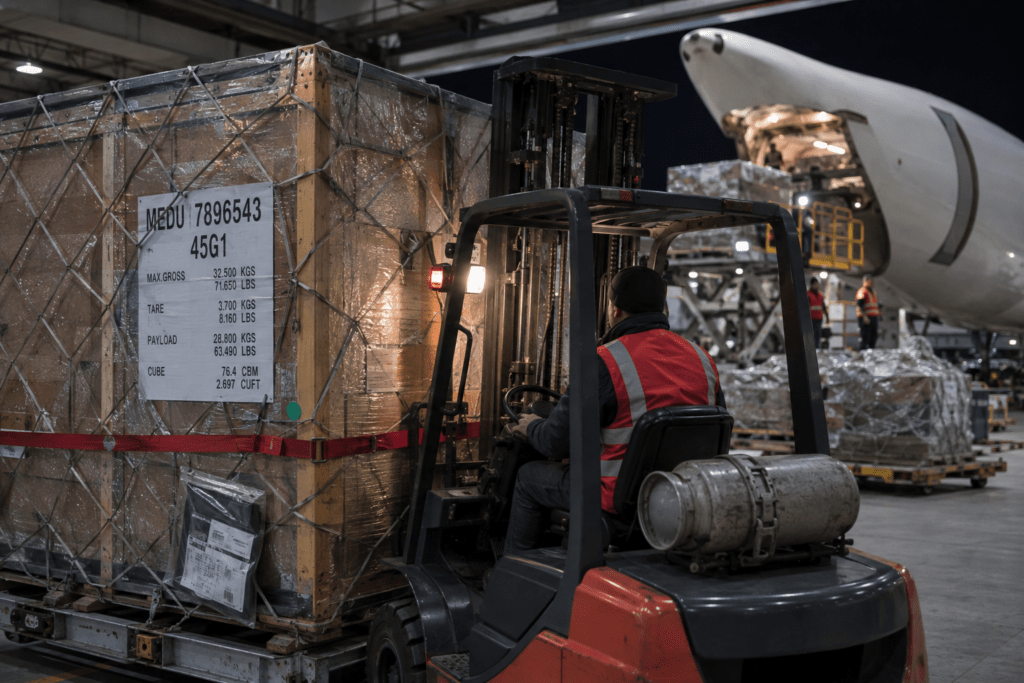
As ocean lead times stretch and become less predictable, a portion of that volume does not wait quietly. Shippers with contractual delivery commitments or thin buffer stock move affected cargo onto air freight capacity that was not built to absorb sudden surges. The result is a second order effect: air freight lead times, historically the reliable fallback when ocean planning failed, now carry their own volatility, driven by a chokepoint thousands of kilometers from any airport.
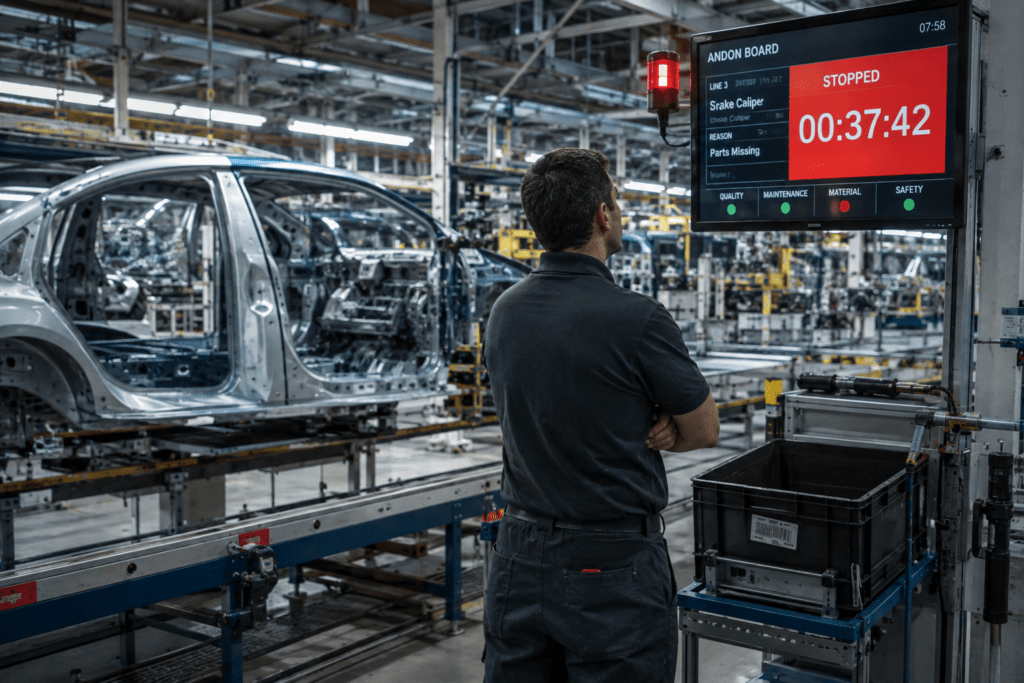
This chain reaction rarely stays confined to a logistics dashboard. It travels upstream to sourcing decisions and downstream to the factory floor, where a delayed component does not register as a shipping delay. It registers as a stopped line. Understanding that transfer, from ocean disruption to production risk, is the starting point for quantifying what is actually at stake.
Building a Framework for the True Cost of a Stoppage
A missed delivery window is rarely, at its core, a transportation problem. It is a production economics problem that happens to be triggered by a truck, vessel, or aircraft arriving late. Framing it this way changes how OEMs and Tier 1 suppliers should evaluate the premium attached to expedited freight.
The financial exposure is well documented even where it is inconsistently tracked internally. Industry research into unplanned downtime puts the average cost for an automotive assembly line at roughly two million dollars per hour of stopped production, an order of magnitude above general manufacturing. Separately, McKinsey's research on supply chain disruption found that companies can lose the equivalent of a significant share of a full year's profit over a decade once disruptions of a month or longer are factored in, and a more recent McKinsey survey found that most organizations still only have visibility into risk at their direct, tier one suppliers.
Set against those figures, the premium for on demand or expedited freight looks very different. A single hour of an assembly line at a standstill can outweigh weeks of accumulated freight premiums, yet many procurement processes still compare the two costs as if they belonged in the same category of expense. A more complete framework accounts for four variables together: idle labor and overhead, contractual penalties owed to the OEM's own customers, the expedite premium itself, and the opportunity cost of output that cannot be recovered later in the shift.
None of these variables is difficult to estimate on its own. What is missing in most organizations is the habit of adding them together before a disruption happens, rather than during one, a point the World Economic Forum has also raised in describing supply chain shocks as a near permanent operating condition. Once a framework exists, authorizing a premium shipment stops being a judgment call made under pressure and becomes closer to a calculation, which is precisely where logistics networks built for time sensitive freight can add the most value.
How Logistics Networks Are Adapting
Some logistics networks are already moving in this direction, organizing themselves around the idea that regular freight and on demand freight are not competing options but complementary tools that serve different points on the same cost curve.
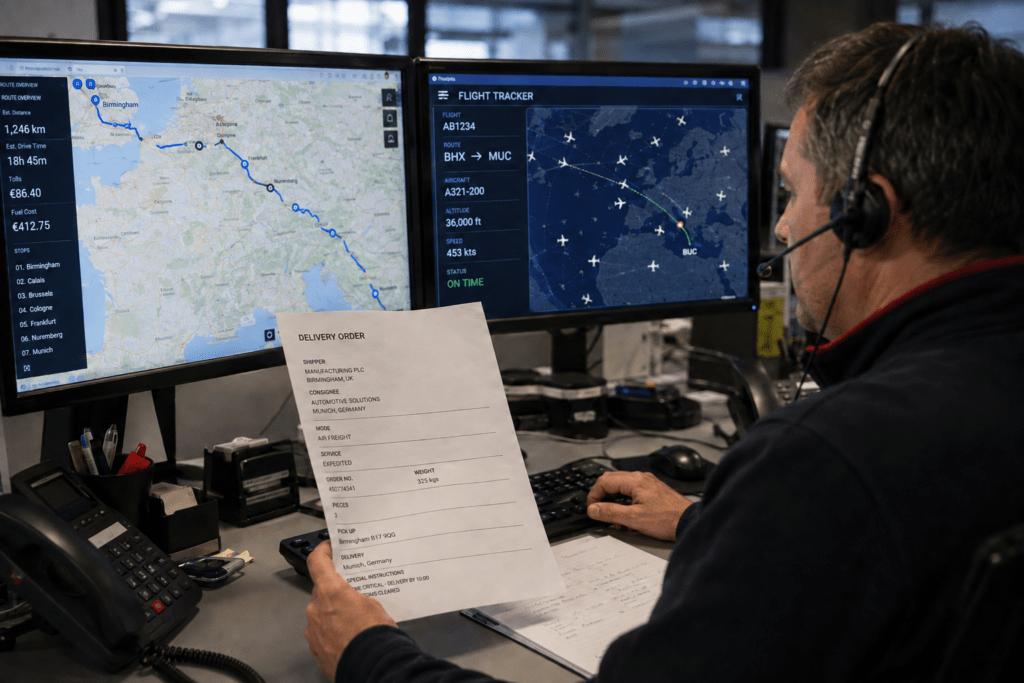
At Flash, we see this playing out as a hybrid model: a base of planned, consolidated transport handling predictable volume, supported by an on demand layer that activates when the cost of delay outweighs the cost of urgency. This structure depends less on owning a large fixed fleet and more on a partner based logistics network capable of covering road and air movements across multiple regions, so capacity exists where and when a production line actually needs it. Vertical markets such as automotive, aerospace, and healthcare each carry a different threshold for what counts as urgent, and a network built around flexibility can price and route accordingly.
From an operational perspective, this is less about replacing traditional freight forwarding and more about giving supply chain teams an additional lever. A framework for the true cost of a stoppage only has value if a fast, reliable option exists to act on it once the calculation points that way. Without that option, the framework remains theoretical.
The broader lesson from a year defined by rerouted vessels and stretched air freight lead times is not that one mode of transport has failed the other. It is that the future of logistics belongs to those who can adapt continuously, not by choosing between regular or on demand freight, but by mastering the balance between both.